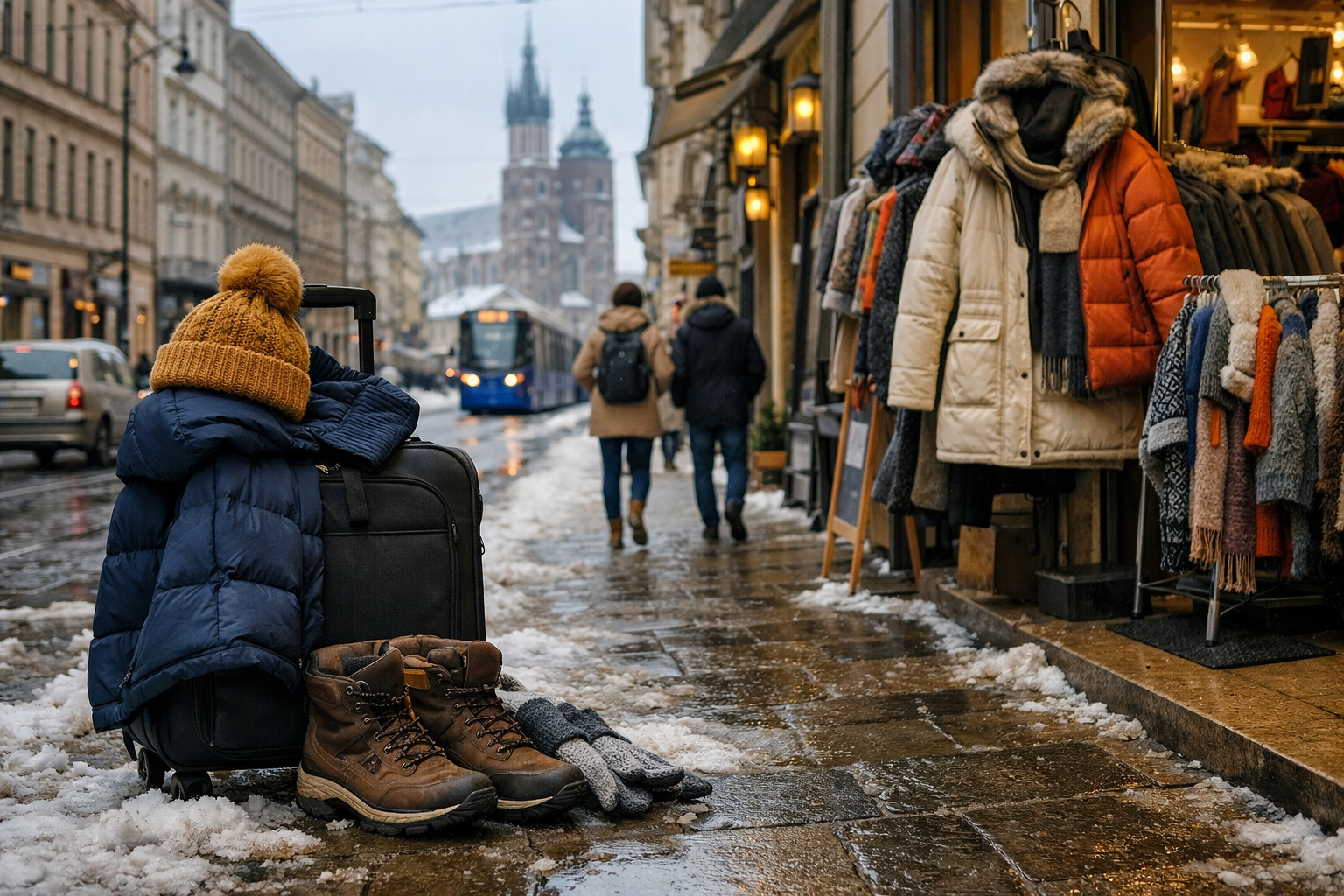
For a winter visit to Kraków, pack adjustable layers, a warm waterproof outer layer and broken-in footwear with good grip. December to February can bring conditions around or below freezing, but snow is not guaranteed. The most useful approach is to prepare for cold, damp weather and long walks rather than for a permanent snow-covered city.
What should you wear in Kraków in winter?
Build your outfit in layers so you can adjust it between outdoor sightseeing, heated interiors and evenings spent moving between cafés, restaurants and attractions. A practical winter combination is.
- a moisture-managing or comfortable base layer;
- a warm middle layer such as a jumper, fleece or light insulated jacket;
- a wind-resistant, water-resistant coat with enough room for the layers underneath;
- warm trousers or another comfortable lower layer suitable for extended walking;
- warm socks, preferably with enough room in your shoes to avoid restricting your feet;
- a hat, gloves and a scarf for colder or windy periods.
You do not normally need to pack specialist ski clothing for an ordinary Kraków city break. The priority is flexibility: clothing that works for a cold morning outside, a warmer indoor venue and another walk after dark.
How cold is Kraków from December to February?
Long-term 1991-2020 climate averages put Kraków’s average temperature at approximately -0.5°C in December, -1.6°C in January and -0.2°C in February. These figures show the general character of the season, with January usually the coldest of the three months, but they are not a forecast for your travel dates.
Check a current forecast shortly before departure and adjust your packing accordingly. A forecast showing rain, freezing conditions or strong wind changes the balance between lighter layers and heavier insulation. Monthly climate averages also do not tell you whether precipitation will fall as rain or snow, or how conditions will develop on a particular day.
What footwear is best for Kraków in winter?
Choose previously broken-in, stable shoes or boots with tread, enough room for warmer socks and some protection from moisture. This combination is more useful than simply choosing the heaviest boots available: you may walk for much of the day, and uncomfortable footwear can quickly become the main problem.
Kraków city-centre sightseeing is well suited to exploring on foot. The practical walking area includes the historic centre, Planty, Rynek Główny, Wawel, the Vistula boulevards and Kazimierz. Your footwear therefore needs to remain comfortable on hard urban surfaces and during repeated transitions between outdoor streets and indoor venues.
High heels and very thin soles are poor choices for a walking-focused winter visit. Trainers may be suitable if they are warm enough, have reliable tread and offer reasonable protection from damp conditions; lightweight summer trainers with smooth soles are less adaptable.
Compare the next practical option for your trip.
Do Kraków’s streets require special footwear?
Not every street in Kraków has the same surface, so there is no need to assume that the whole city is uneven or cobbled. However, historic areas can include hard, irregular surfaces and busy pedestrian routes. Bracka Street, between Wiślna Street and Grodzka Street, is a specific example of a short cobbled street leading from the Main Market Square towards Franciszkańska Street.
Kraków Old Town is a historic area with narrow streets and many pedestrians, with special traffic rules applying inside the First Ring Road and around Wawel Castle. That setting makes secure, comfortable footwear more useful than fashion-led shoes with little grip. Watch your footing in poor weather and avoid choosing shoes that you have not worn before the trip.
How should you dress for walking between the Old Town and Kazimierz?
Kazimierz lies next to Kraków Old Town and can be explored on foot among historic buildings, atmospheric streets, cafés and restaurants. You may spend part of an evening outdoors moving between venues, even if much of the time is indoors. Wear layers that can be opened or removed easily, and keep a warm outer layer available rather than relying only on a thick jumper.
For this part of Kraków, the most useful combination is a warm coat, comfortable trousers, gloves and moisture-resistant footwear. If the forecast is wet, add a compact waterproof layer or choose a coat that provides dependable rain protection. If it is merely cold and dry, flexible insulation is usually more practical than bulky snow equipment.
What should you pack for a Kraków winter city break?
A compact packing list can cover most ordinary December-to-February visits.
- one warm, weather-resistant coat;
- two or three interchangeable mid-layers;
- comfortable trousers suitable for walking;
- enough warm socks for the length of the trip;
- broken-in shoes or boots with tread;
- a hat, gloves and scarf;
- a small bag for carrying or removing layers during the day;
- an umbrella or packable waterproof layer if the forecast suggests rain.
Base the final choices on the date-specific forecast rather than assuming that every winter day will bring snow. For most visitors, the best answer to what to wear in Krakow winter is adaptable clothing and dependable walking footwear: warm enough for temperatures around freezing, practical in damp conditions and comfortable across the historic centre and Kazimierz.