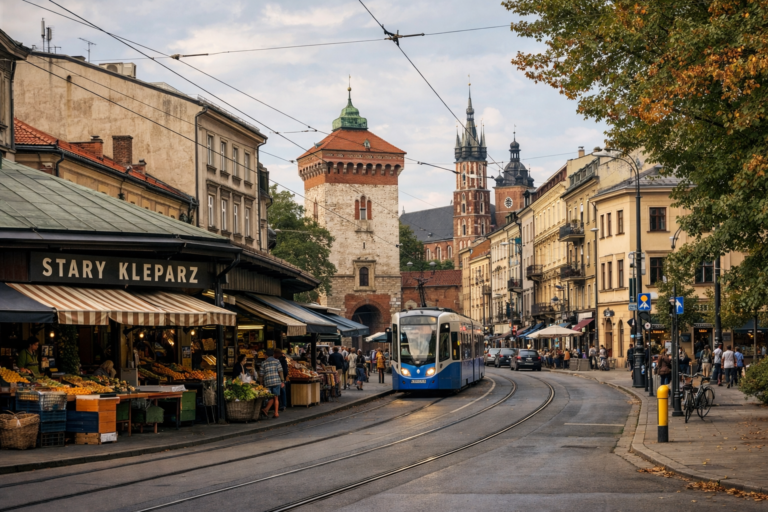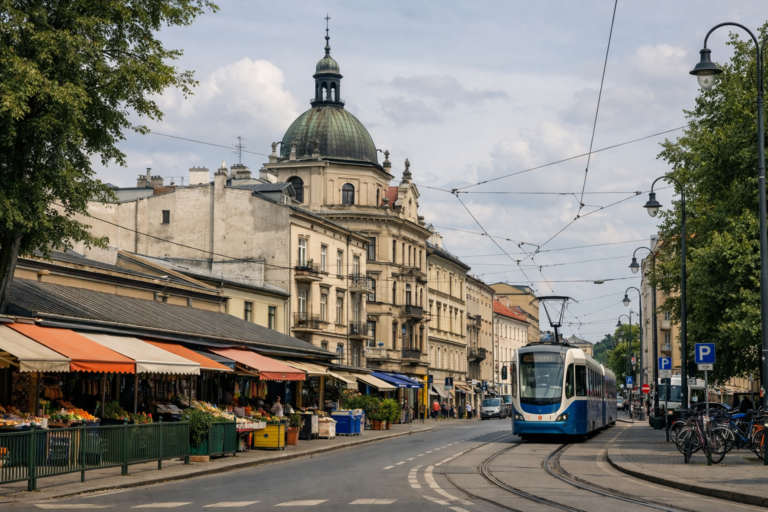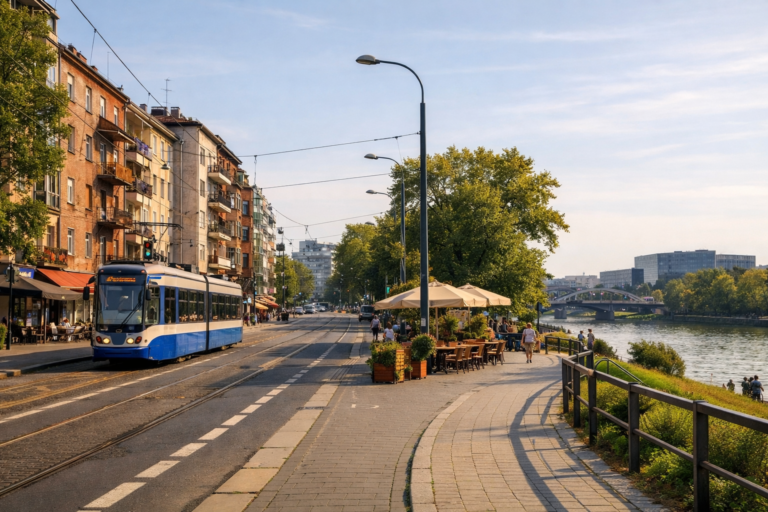
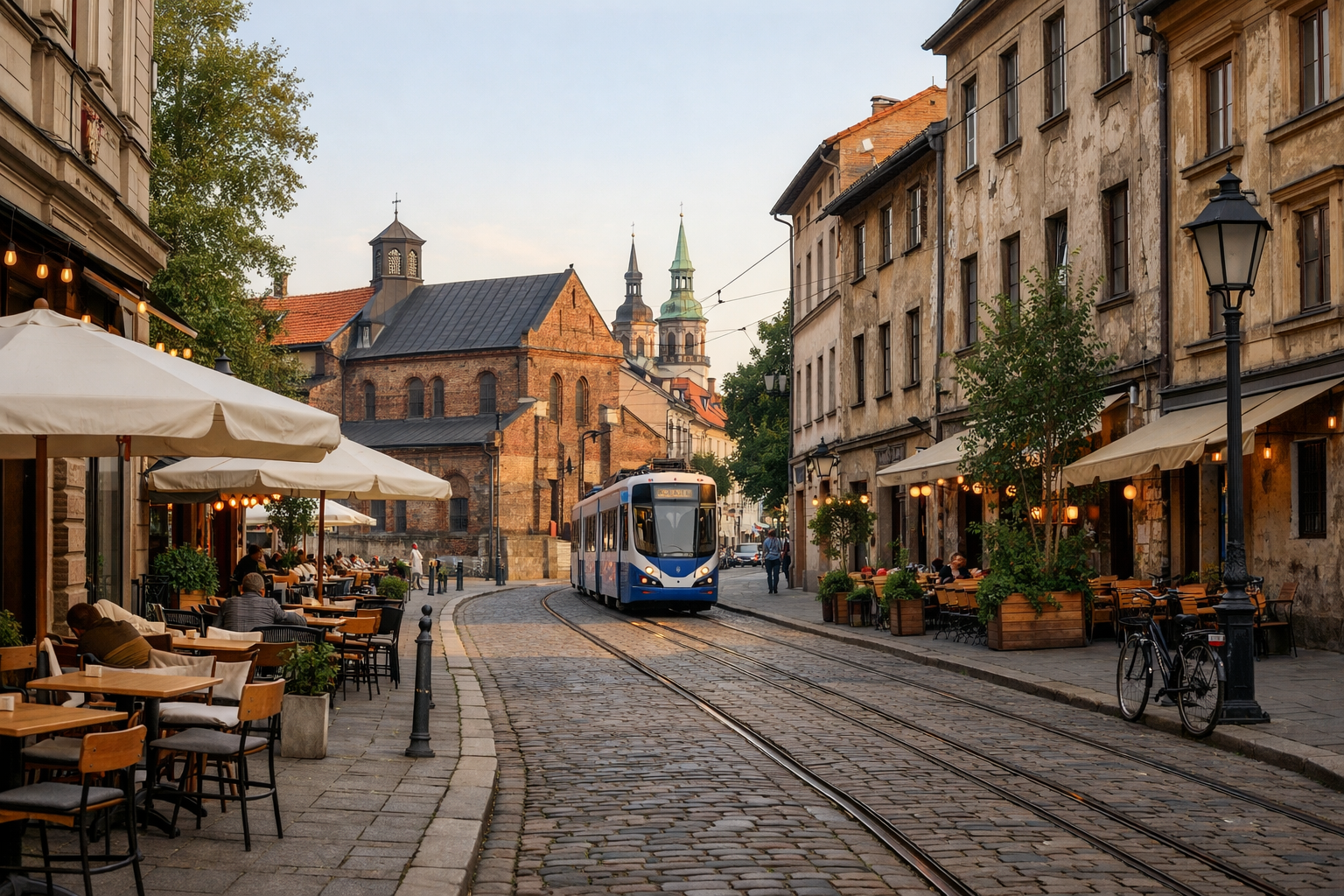
Kazimierz is one of Krakow’s most rewarding areas to explore and stay in, but it is more than a “Jewish Quarter”. The neighbourhood is a broad historic part of the city where the former Christian town of Kazimierz, the historic Jewish district, modern food and nightlife venues, the Vistula riverfront and the route to Podgórze all meet.
For visitors, this means Kazimierz is best understood as a layered neighbourhood rather than a single attraction. You can begin with the former market square at Plac Wolnica, continue through the Jewish heritage of Ulica Szeroka, experience the contemporary atmosphere of Plac Nowy and then cross the Vistula on Kładka Ojca Bernatka. Each area tells a different part of Krakow’s story.
What is Kazimierz in Krakow?
Kazimierz was once a separate town, founded in 1335, before it was incorporated into Krakow in 1800. Today it is part of Krakow’s Dzielnica I Stare Miasto administrative district, but it remains a distinct historic area with its own urban character.
The former town included both a Christian centre and a Jewish district that developed with a high degree of autonomy. That distinction matters when planning a visit. The historic Jewish district was located within Kazimierz, but Kazimierz as a whole was not identical to it.
The area is also close to two other important parts of Krakow. The Old Town lies to the north, while Podgórze is across the Vistula. The Krakow ghetto was established in Podgórze, on the other side of the river, rather than in Kazimierz. Crossing between these areas helps put their different historical roles into context.
Which parts of Kazimierz should you explore?
Plac Wolnica and the former Christian town
Plac Wolnica, Kazimierz, Krakow, was the former market square of the town of Kazimierz. It is an important starting point because it represents the Christian and civic layer of the neighbourhood rather than the Jewish district alone.
The square retains the Renaissance town hall of Kazimierz. Its surrounding urban setting also includes the Church of Corpus Christi and the Church of St Catherine. These landmarks show how the former town was organised around civic and religious institutions before Kazimierz became part of Krakow.
For visitors, Plac Wolnica is a useful orientation point. From here, you can appreciate that Kazimierz is not simply a collection of cafés and nightlife streets. It has the scale and structure of a historic town, with a former market square at its centre and major churches forming part of its long-established urban landscape.
Ulica Szeroka and the historic Jewish district
Ulica Szeroka, Kazimierz, Krakow, is one of the clearest places to encounter the historic Jewish layer of Kazimierz. The street belongs to the main area of the former autonomous Jewish district, where surviving synagogues and the Remuh Cemetery provide material evidence of that history.
A visit here is more meaningful when treated as an introduction to Jewish heritage rather than as a generic sightseeing stop. The buildings and street layout are connected to the former Jewish community of Kazimierz, while the neighbourhood’s present-day restaurants, bars and cultural venues belong to a much later period.
It is therefore worth separating historical memory from modern branding. Contemporary Kazimierz is lively and popular, but its food and nightlife should not be described as an uninterrupted continuation of pre-war Jewish life.
Plac Nowy and contemporary Kazimierz
Plac Nowy, Kazimierz, Krakow, is the modern social focus of the neighbourhood. It brings together a bazaar, food venues and nightlife, creating a very different atmosphere from the historic civic setting of Plac Wolnica.
This contrast is one of Kazimierz’s defining features. Plac Wolnica was the market square of the former town, while Plac Nowy is best understood as a contemporary gathering point. It is useful for visitors looking for the area’s current atmosphere, but it should not be presented as the historic market square of Kazimierz.
During the day, Plac Nowy helps reveal the neighbourhood’s everyday commercial life. Later, its surrounding streets become part of Kazimierz’s evening scene. The area can be busy and energetic, so travellers seeking a quieter stay may prefer accommodation on a less central side street while remaining within walking distance of the main sights.
Why is Kazimierz more than the Jewish Quarter?
The strongest reason to visit Kazimierz is the coexistence of different historic and religious traditions within one compact part of Krakow. The Christian town is represented by Plac Wolnica, the former town hall, the Church of Corpus Christi and the Church of St Catherine. The Jewish heritage is especially visible around Ulica Szeroka, the surviving synagogues and the Remuh Cemetery.
These layers should be explored together, but not collapsed into one label. Calling the whole neighbourhood the “Jewish Quarter” leaves out its earlier identity as an independent town and obscures the relationship between its Christian and Jewish areas.
A practical way to visit is to treat the neighbourhood as a connected sequence.
- Start at Plac Wolnica to understand the former civic centre of Kazimierz.
- Continue towards Ulica Szeroka and the historic Jewish district.
- Use Plac Nowy to experience contemporary food, market and nightlife activity.
- Finish at the river and cross towards Podgórze using Kładka Ojca Bernatka.
This approach gives you a more balanced picture than focusing only on the most photographed streets.
How does Kazimierz connect with Podgórze?
Kładka Ojca Bernatka is a practical pedestrian and cycle connection between Kazimierz and Podgórze. The bridge runs between Ulica Mostowa in Kazimierz and Ulica Brodzińskiego in Podgórze, crossing the Vistula over a length of 143 metres.
Its location makes it a natural extension of a Kazimierz visit. Rather than treating the river as the end of the neighbourhood, you can use the footbridge to continue into historic Podgórze and explore a different side of Krakow’s past.
The distinction between the two areas is important. Kazimierz was home to the historic Jewish district, while the Krakow ghetto was created in Podgórze across the river. Crossing the bridge does not take you to another part of Kazimierz; it takes you into a neighbouring historic area with a separate wartime history.
The bridge also provides a clear way to understand Krakow geographically. Kazimierz sits between the historic centre and the Vistula, while Podgórze continues on the opposite bank. This makes the neighbourhood particularly useful for visitors who want to combine several historic areas in one day without treating them as interchangeable.
Compare the next practical option for your trip.
Where should you stay in Kazimierz?
Kazimierz can be a good base for visitors who want historic surroundings, restaurants and evening activity close at hand. Its position also makes it practical for combining the Old Town, the riverfront and Podgórze.
The main decision is not whether Kazimierz is central, but which type of atmosphere suits your trip. Staying close to Plac Nowy places you near the neighbourhood’s contemporary food and nightlife scene. Choosing a location closer to Plac Wolnica gives you a stronger connection with the former civic centre and the churches of the historic town. Areas towards the river can make the route to Kładka Ojca Bernatka more convenient.
Because Kazimierz combines homes, historic streets, cultural sites and evening venues, the exact position of accommodation matters. Check the immediate surroundings on a map rather than relying only on the neighbourhood name. Two properties described as being in Kazimierz can offer noticeably different settings depending on whether they are near Plac Nowy, Plac Wolnica, Ulica Szeroka or the Vistula.
How do you get around Kazimierz?
Kazimierz is well connected with the historic centre and with areas across the Vistula. The main public transport corridors around the neighbourhood include Starowiślna, Dietla, Stradomska and Krakowska, with connections continuing through Podgórze.
Tram routes and diversions can change, so check the current Krakow public transport information for your travel date rather than relying on a number remembered from an older guide. For many visits, the most useful plan is to combine public transport for the longer approach with walking between the main Kazimierz areas.
The neighbourhood’s historic layout is best experienced at street level. Plac Wolnica, Ulica Szeroka, Plac Nowy and the route towards Mostowa represent different parts of Kazimierz, and moving between them helps explain how the area fits together. If you continue across Kładka Ojca Bernatka, check the return route separately, particularly if you are travelling later in the evening.
What is the Kazimierz Cultural Park?
Park Kulturowy Kazimierz ze Stradomiem covers Kazimierz, Stradom, part of the Vistula Boulevards and an area associated with the former course of the river. The cultural park was established by a resolution adopted on 27 April 2022 and has been in force since 1 September 2022.
For visitors, its relevance is practical rather than administrative. The park is intended to protect the cultural landscape of the area, including the appearance and use of public space. This helps explain why signage, advertising and outdoor commercial arrangements may be subject to rules designed to preserve the historic character of Kazimierz and Stradom.
You do not need to study the park’s legal framework before visiting. It is enough to recognise that Kazimierz is a protected historic environment as well as a lively modern neighbourhood. That combination is central to its appeal: the area continues to change, but its streets and landmarks remain closely connected to Krakow’s earlier urban history.
Is Kazimierz worth visiting?
Yes, especially if you want to see more than Krakow’s main Old Town square. Kazimierz offers a concentrated mix of civic history, Christian and Jewish heritage, contemporary food culture, nightlife and access to the Vistula and Podgórze.
The best visit is one that allows room for all of these elements. See Plac Wolnica as the former centre of the independent town, explore Ulica Szeroka as part of the historic Jewish district, treat Plac Nowy as a modern social hub and use Kładka Ojca Bernatka to understand the relationship between Kazimierz and Podgórze.
That broader view is what makes Kazimierz distinctive. It is not one themed quarter or a single nightlife destination, but a large historic part of Krakow where several identities remain visible side by side.