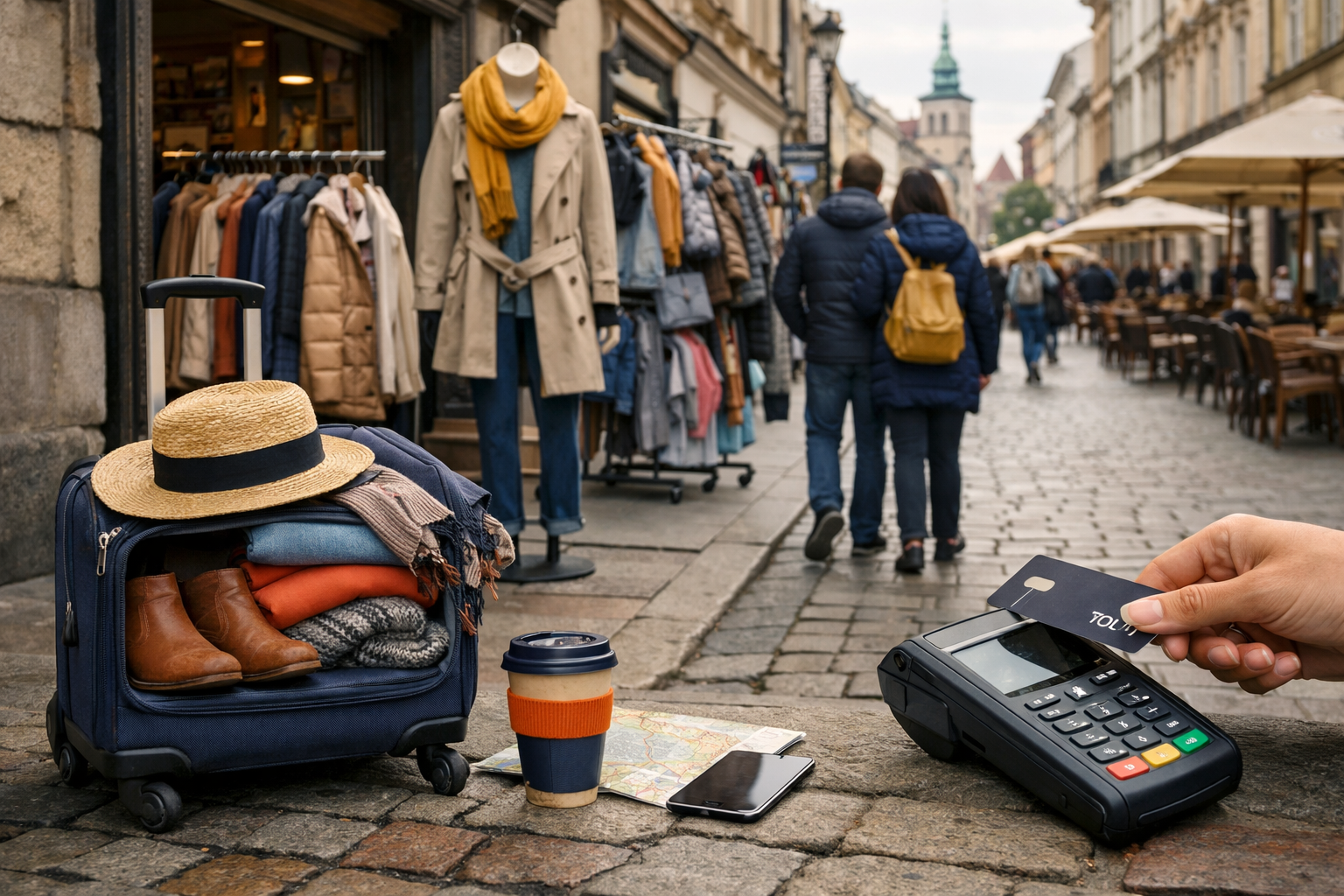
The best answer to what to wear in Krakow is practical layering: comfortable shoes, a breathable base layer, one warm layer, a light waterproof or windproof jacket, and a small bag. Krakow sightseeing often combines long periods outdoors with visits to museums, courtyards and historic interiors, so your clothing should be easy to adjust rather than designed for one temperature or one type of activity.
Pack for walking first, then adapt the layers to the season. The weather can change during the day, evenings can feel much cooler than afternoons, and rain can turn a comfortable city walk into an unpleasant one if you have no lightweight protection.
What should you pack for a day of sightseeing in Krakow?
A full day may involve the Old Town, Wawel Hill, green spaces and further parts of the city rather than one compact attraction. Even if you plan to use public transport between areas, you are likely to spend time walking outdoors, standing while looking at buildings and moving between entrances and exhibitions.
- Comfortable walking shoes with secure soles are more useful than smart shoes or thin fashion trainers. Historic streets and long sightseeing days reward support and cushioning.
- A base layer, such as a T-shirt or lightweight long-sleeved top, gives you flexibility when you move between outdoor spaces and heated interiors.
- A seasonal warm layer – for example, a fleece, cardigan, jumper or light insulated jacket – is useful when temperatures drop in the evening.
- A waterproof or windproof outer layer is easier to carry than a heavy coat in milder weather and protects you from sudden showers or wind.
- A small bag is more practical than a large backpack when you plan to enter museums or historic interiors.
Choose clothes that allow you to walk comfortably for several hours. Trousers, jeans, walking trousers or longer skirts are all workable choices; the important point is freedom of movement and protection from changing conditions. If you wear a dress or shorts in summer, add a light outer layer for cooler evenings and air-conditioned interiors.
What should you wear in Krakow in spring?
Spring is best approached as a changeable season rather than a single weather pattern. A sunny afternoon can feel mild, while morning and evening may still require a jumper or jacket. Light layers let you respond without carrying a bulky coat all day.
For March and early spring, start with a warmer base and take a proper jacket that protects against wind and rain. Closed shoes are usually the sensible choice for sightseeing. As spring progresses, a long-sleeved top under a light jacket may be enough for daytime, but keep an additional layer if you will be outside after sunset.
Pack a compact umbrella only if you are prepared to carry it and if your day does not include attractions with bag restrictions. A hooded waterproof jacket is often easier when walking, particularly when you need both hands free for maps, tickets or railings. Do not rely on an umbrella as your only rain protection if the forecast suggests wind.
What should you wear in Krakow in summer?
Summer visitors should prioritise breathable clothing, comfortable shoes and protection from rain and sun. Lightweight trousers, shorts, skirts, dresses and T-shirts can all work, but include one thin layer for cooler evenings and indoor spaces.
A summer sightseeing outfit should also cope with long walks. Choose footwear that you have already worn comfortably rather than bringing a new pair for the trip. Sandals can be suitable if they offer secure support; very thin soles are less comfortable for a full day on historic streets and pavements.
Take a light waterproof jacket or packable rain layer. Summer showers can change your plans quickly, and a jacket is useful even when the daytime forecast looks warm. Sunglasses, sun protection and a reusable water bottle can also make a long day easier, but avoid filling your bag with items you may not be allowed to take into an exhibition.
What should you wear for Wawel Hill in summer?
Wawel Hill combines outdoor sightseeing with courtyards, historic buildings and indoor exhibitions. Dress in layers that can be removed easily rather than wearing one heavy item. You may be in direct sun outside, then move into a cooler interior or wait in an area exposed to wind.
There is also a practical reason to keep your belongings small. Wawel Royal Castle requires visitors to leave backpacks, bags, umbrellas, walking sticks and other items exceeding the stated dimensions in storage before entering particular exhibitions. These rules apply to the relevant exhibitions and objects, not to every attraction in Krakow, so check the current visitor information for your planned visit.
From 27 June to 31 August 2026, some smaller exhibition spaces at Wawel Royal Castle may be temporarily closed or have restricted access because of conservation work and climate-control checks. This is a temporary arrangement, not a permanent rule. If your summer outfit or day plan is based around several indoor exhibitions, check the current status before setting out and keep your schedule adaptable.
What should you wear in Krakow in September, October and November?
Autumn changes noticeably across these three months. Average minimum temperatures cited for the period 1991-2020 fall from 9.2°C in September to 4.7°C in October and 0.6°C in November. These are climate averages, not a forecast for your particular visit, but they show why one autumn packing list is not enough.
September
September can still feel comfortable during the day, but evenings are more likely to need a jumper or light jacket. Pack short- and long-sleeved tops, a layer that can be carried during the day, and a rain-resistant outer layer. Comfortable trainers or walking shoes remain suitable for most city sightseeing.
October
In October, use a warmer mid-layer and a jacket that protects against rain and wind. A long-sleeved base layer is more useful than relying on a single thick jumper, because you can adjust it when entering heated museums or cafés. Closed, comfortable shoes become increasingly important as wet pavements and cooler conditions make unsuitable footwear more noticeable.
November
November calls for a warmer coat or insulated jacket, especially if you will be outside in the morning or evening. Add warm socks, a scarf and gloves if you feel the cold easily. Shoes should be comfortable, closed and suitable for damp conditions. A hat can be useful, but prioritise layers that keep your torso warm and a jacket that blocks wind.
Compare the next practical option for your trip.
How should you dress for Krakow museums and historic interiors?
There is no single dress code for every museum or attraction in Krakow, so think in terms of comfort and site-specific rules. Indoor spaces may feel warmer than outside, while stone buildings and historic interiors can feel cooler. Layers are therefore more practical than a thick outfit that cannot be adjusted.
Keep your bag small when you plan to visit exhibitions. At some Museum of Krakow exhibitions, visitor regulations restrict larger bags or items that could affect the displays or visitor movement. Wawel Royal Castle also has restrictions for particular exhibitions, including larger backpacks, umbrellas and walking sticks. Check the relevant attraction’s current rules rather than assuming that a bag accepted at one venue will be accepted everywhere.
Wear clothing that is easy to manage at security checks or cloakroom areas. Multiple small accessories, a large backpack and a bulky coat can make transitions slower and less convenient. A cross-body bag or small day bag is usually easier to keep organised, provided it meets the attraction’s requirements.
What should you wear for an evening in Krakow?
For most evening plans, smart-casual clothing is a flexible choice. A neat jumper, blouse or shirt with comfortable trousers, a skirt or a simple dress will work for many restaurants, bars and cultural venues. Bring a layer for the journey back to your accommodation because temperatures can fall after sunset.
If you are combining dinner with more sightseeing, keep the same practical shoes you would wear during the day. Changing into formal shoes may look appropriate but can become uncomfortable after hours of walking. A compact jacket or coat also helps when moving between heated interiors and the street.
Do not assume that every religious building has identical clothing requirements. Individual churches and services may have their own expectations, so check the information for a particular visit if it is an important part of your itinerary. When in doubt, clothing that covers the shoulders and reaches around the knees is a respectful, versatile option without treating it as a universal Krakow rule.
What should you wear during major events in Krakow?
Large events add a different practical consideration: more time may be spent walking, waiting outside or carrying your belongings through busy surroundings. Choose supportive shoes, a small bag and layers that can cope with changing temperatures. Avoid packing more than you need, particularly if you will also visit an attraction with bag restrictions.
One scheduled example is the Memorial of Hubert Jerzy Wagner at TAURON Arena Kraków from 28 to 30 August 2026, with the city calendar indicating approximately 38,000 participants. This does not by itself confirm transport delays or road closures, but visitors attending the event should allow for the possibility of queues, outdoor waiting and extra walking. A light rain layer can be more useful than a large umbrella, and comfortable shoes are essential.
What should you leave out of your Krakow suitcase?
A few common packing choices create unnecessary problems. Avoid relying on one pair of untested shoes, bringing a heavy coat in mild weather without room for lighter layers, or carrying a large backpack when your itinerary includes museums and Wawel exhibitions.
You also do not need a completely separate outfit for every type of attraction. A small, adaptable wardrobe is easier: breathable tops, one or two warm layers, a weather-resistant jacket, comfortable trousers or other walking-friendly clothing, and shoes suitable for long days. Add seasonal accessories as temperatures require.
The most reliable approach to what to wear in Krakow is to plan for movement between conditions. Dress for several hours on foot, carry a layer for the evening, protect yourself from rain and wind, and keep your bag small enough for the exhibitions you want to visit. That combination works better than chasing a particular style and remains useful whether your day includes the city centre, Wawel Hill, green spaces or a major event at TAURON Arena Kraków.