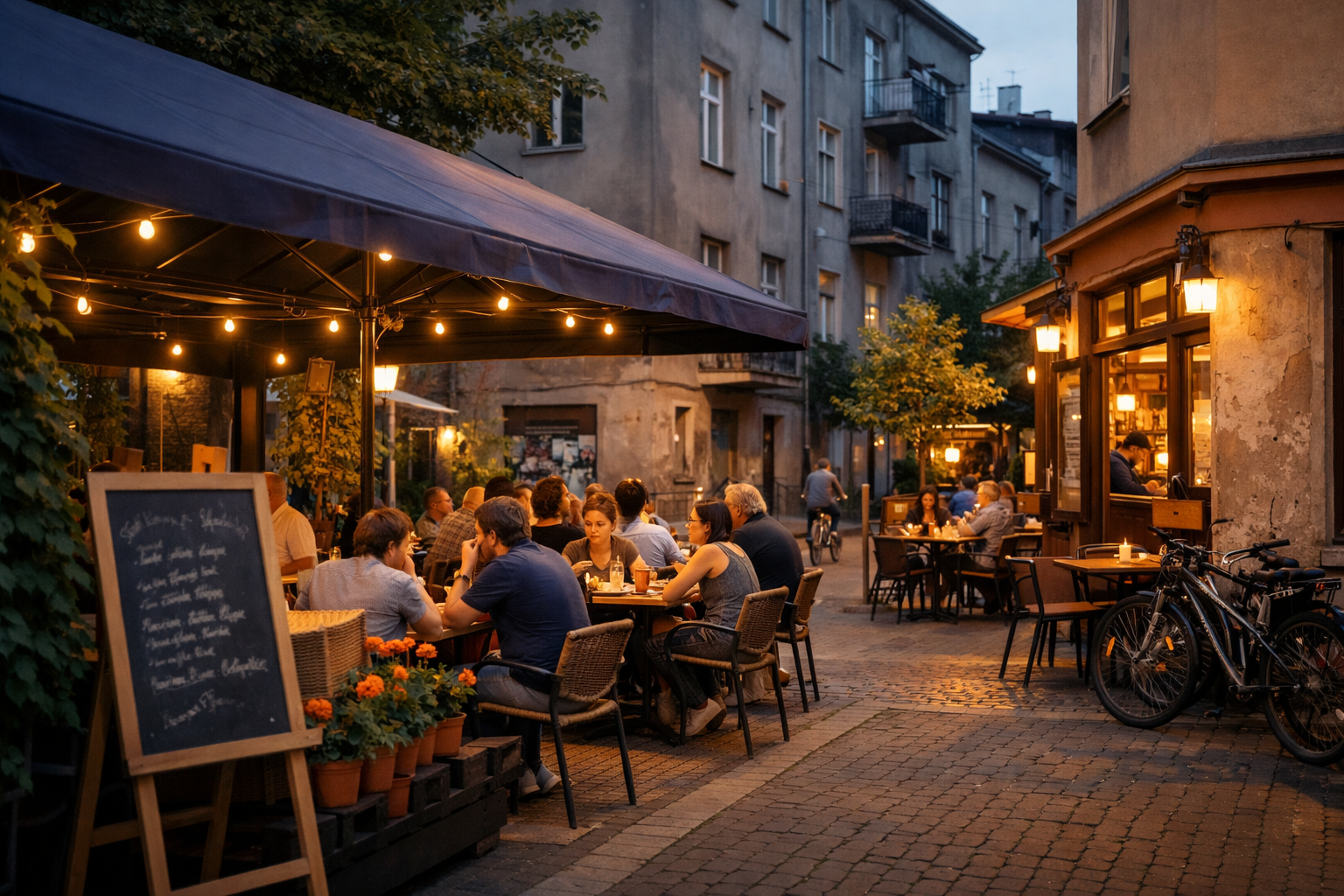
Where do locals eat in Krakow? The most useful answer is not one secret restaurant. For everyday food away from the Main Market Square frontage, look at three local formats: milk bars serving traditional Polish meals, food markets where residents buy bread and produce, and neighbourhood restaurants outside the busiest tourist streets.
That does not mean every Krakow resident eats in the same places. It means these are practical ways to find the kind of food associated with ordinary district life rather than a restaurant selected only for its position beside the Old Town’s main sights.
What does “local food” mean in Krakow?
In Krakow, a local eating experience can be simple and inexpensive-looking rather than fashionable. A bar mleczny, or milk bar, is a self-service establishment associated with traditional Polish cooking. The format is useful for visitors because it usually makes familiar dishes such as pierogi, soups and simple main courses easier to identify than a long restaurant menu written mainly for tourists.
Markets offer a different experience. They are primarily places to buy ingredients rather than guaranteed sit-down dining destinations. At a market, you can look for bread, cold meats, dairy products, fruit and vegetables, then use the surroundings as a starting point for exploring a district.
The practical lesson is to choose the experience first. Go to a milk bar for a straightforward cooked meal, visit a market for local food shopping and neighbourhood atmosphere, and consider a district restaurant when you want a more contemporary meal away from the centre.
Where can you try a traditional milk-bar meal?
Bar mleczny Targowy in Grzegórzki
Bar mleczny Targowy is at al. Ignacego Daszyńskiego 19, Krakow, in Grzegórzki. It is a concrete option for visitors who want traditional Polish food outside the immediate Main Market Square frontage. The venue is particularly associated with pierogi ruskie and pierogi leniwe.
Although both names include “pierogi”, they are not the same style of dish. Pierogi ruskie are filled dumplings traditionally associated with potato and twaróg cheese, while pierogi leniwe are soft cheese dumplings rather than filled parcels. That makes Targowy a useful place to compare two familiar Polish formats if both are available when you visit.
Historical city menu information also mentions less typical sweet dishes, including chocolate pudding and blackcurrant jelly. Treat those details as examples of the sort of traditional, uncomplicated food connected with the venue rather than as a promise of a current menu. Menus can change, so it is sensible to check what is being served on the day.
For a visitor staying near the Old Town, Targowy is most useful as part of a wider Grzegórzki food stop. It can be paired with a visit to the nearby Hala Targowa area, but it should be understood as a milk bar rather than as a polished destination restaurant.
Bar mleczny Flisak near Kościuszki
Bar mleczny Flisak is at ul. Kościuszki 1, 30-105 Krakow. It is another option for traditional Polish cooking in a district setting rather than directly on the Main Market Square. A recent municipal document confirms the venue and address, while city descriptions associate it with zupa mleczna, pierogi and łazanki.
Zupa mleczna is a traditional milk-based dish, while łazanki are small pieces of pasta commonly served with cabbage and other simple ingredients. These dishes may be more interesting to visitors who want to understand the older milk-bar tradition than a generic “Polish restaurant” label would suggest.
Flisak is especially useful if you want a classic milk-bar format but are exploring the area around Kościuszki rather than Grzegórzki. There is no need to treat it as a definitive representation of Krakow food culture: it is simply one specific, documented example of a traditional format that remains relevant to visitors looking beyond the central tourist restaurant streets.
Current opening hours are not included here, so check the venue’s present-day information before making it the fixed point of an evening plan.
Where can you shop for local food rather than eat a full meal?
Unitarg and Hala Targowa in Grzegórzki
Unitarg / Hala Targowa is at ul. Grzegórzecka 3, Krakow, in Grzegórzki. This is a food market rather than one restaurant with one menu. Its stalls include products such as local bread, traditional cold meats, dairy products, fruit and vegetables.
The distinction matters. A market is useful when you want to see what people buy for home cooking, pick up ingredients for an apartment stay or browse several types of food in one place. It is not accurate to describe every stall as offering the same food, service or opening pattern. Treat Unitarg as a shopping and neighbourhood stop, not as a single dining venue.
Hala Targowa is close enough to the central area to work as a detour for visitors who want to see more of Grzegórzki. However, the market is better approached with a flexible plan. You may find the right ingredients for a picnic or self-catered meal, but you should not assume that a particular stall will provide a prepared lunch or that the whole market operates like a restaurant.
Compare the next practical option for your trip.
Are there neighbourhood restaurants beyond milk bars?
Yes, but this is where careful checking becomes more important. Restaurant listings can change more quickly than the identity of a historic market or a long-established milk-bar address.
Monkey Business Pizza & More was listed at ul. Kazimierza Brodzińskiego 3, Krakow, in Podgórze. The older city listing described Italian pizza, Chicago-style deep-dish pizza, pasta and salads. That makes it a useful example of the kind of contemporary district food that can sit beyond the Old Town restaurant circuit.
However, the listing is historical and does not establish that the venue is still operating today. It should therefore be treated as a lead for checking current Podgórze options, not as a guaranteed present-day recommendation. The broader point remains useful: neighbourhood eating in Krakow is not limited to traditional Polish food. Districts such as Podgórze also have space for modern, international and hybrid menus, but individual businesses need checking before you plan around them.
How should you choose between these options?
- Choose Bar mleczny Targowy if you want a specific Grzegórzki stop associated with pierogi ruskie and pierogi leniwe.
- Choose Bar mleczny Flisak if you want traditional milk-bar food near the Kościuszki area, with zupa mleczna, pierogi and łazanki among the dishes associated with its descriptions.
- Choose Unitarg / Hala Targowa if your priority is food shopping, local ingredients or understanding how a Krakow market works rather than sitting down to one standard menu.
- Look towards Podgórze if you want a more contemporary neighbourhood restaurant, but check the current status of individual businesses before travelling there.
What should visitors know before eating outside the centre?
Do not judge a place only by whether it resembles a familiar Western restaurant. Milk bars can be functional and self-service, with dishes selected from what is available that day. If you are unsure what something is, ask the staff or use the Polish name shown on the menu. Knowing a few words – pierogi, zupa for soup, naleśniki for pancakes and kompot for a traditional fruit drink – can make ordering easier.
It is also worth separating a market visit from a restaurant booking. Unitarg can help you discover ingredients and everyday food shopping, while Targowy and Flisak are the clearer choices when you want a prepared traditional meal. A district restaurant, meanwhile, may offer a different style of cooking altogether.
The best way to eat beyond Krakow’s main tourist areas is therefore to match the place to the meal you want. Start with a milk bar for familiar Polish comfort food, use Hala Targowa for market shopping and local context, and explore neighbourhood restaurants only after confirming that the business is currently open and serving the style of food you expect.